Description
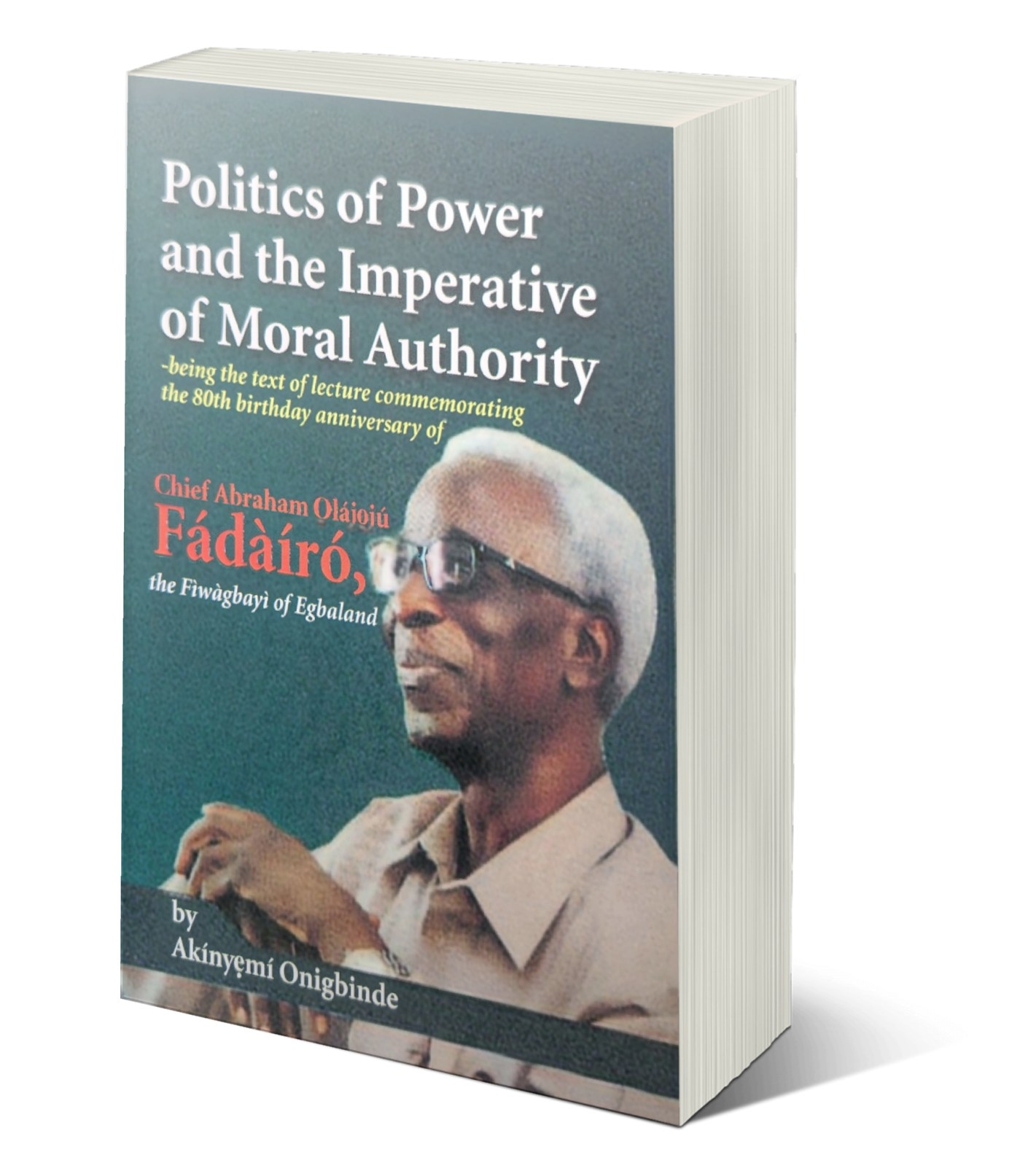
To be sure, the Ibogun’somi-born Oláǹíyì, whose ancestral homestead is Erin Ọba, a sleepy town in Ifo Local Government Area in Ogun State, has fared well since he got enrolled at St. Davids School, Ibogun somi, in 1950, from where he has traversed many educational institutions through Lisabi Grammar School, Idi-Aba Area of Abeokuta; Yaba College of Technology, Yaba, Lagos, ending all formal education at Ealing College of Higher Education in London in 1974. Between 1992 till date, Chief Joji Fádíra has been involved in all grades of political activities in his home state, and in Nigeria, in general.
His approach to politics and contestation for power that has earned him the enviable accolade of ‘christian politician’… For him, gaining political power through elections is not a do or die affair.
Chief Abraham Olájójọ Fádíra is a gentleman of the highest breed, his type is not easily encountered in a social space, where politics has been heavily monetized because poverty has been weaponized.
“The (mis)behaviour of politicians, as examined by Onigbinde, is focused on the abuse of power by politicians…for whom all that matters is power, albeit without responsibility and accountability. It is therefore not a surprise to see how the miserable lives of Nigerian citizens have been under a ‘supposed’ government of the people, by the people and for the people…”
— Obatunde Bright Adetola, PhD
Professor of Development Sociology & Gender Studies,
Department of Sociology, Olabisi Onabanjo University, Ago-Iwoye
On all parameters and indicators of the Omoluabi construct Chief Olájọjọ Fádíra, the Igbádò of Egbaland, is indeed an embodiment of the Omoluabi ethic that should serve as a moral compass for public office seekers in a thoroughly dehumanised, depoliticising, inequality driven and corrupt political space where equity, judiciously, and fairness are all almost of scarce values… that the greatest good are afforded the greatest number of people…
— Olusunkanmi Olapeju, PhD,
Federal Polytechnic, Ilaro